Difference Between SEO & SEM (Beginner-Friendly Guide)
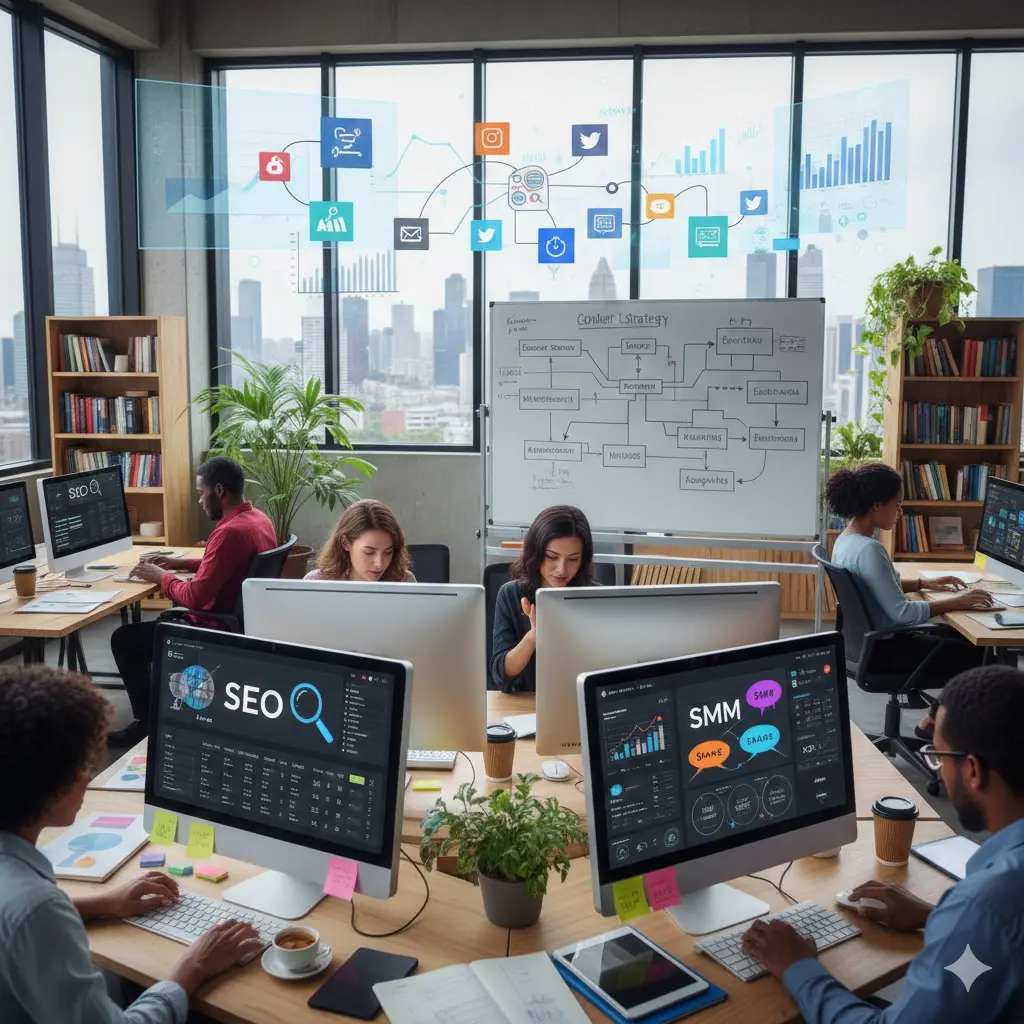
Understanding the Difference Between SEO and SEM in 2025 In today’s digital world, if your business isn’t appearing in search engine results, it’s not really visible to the global audience. Whether you’re an entrepreneur or a marketing professional, you’ve likely come across two important terms: SEO and SEM. Understanding the difference between these two is essential for any effective digital marketing strategy. While both aim to increase your visibility on Search Engine Results Pages (SERPs), they use different methods to achieve this. At Social Crafter, we believe that a brand’s success depends on how well it balances organic growth with paid visibility. This guide will provide a detailed explanation of the difference between SEO and SEM, helping you understand and apply both for your business. What is SEO? (Search Engine Optimization) Search Engine Optimization, or SEO, is the process of optimizing your website to rank higher in the organic search results of search engines like Google.The main goal of SEO is to bring in traffic at no cost. When someone asks what SEO is, they’re essentially asking how to make a website more appealing to Google’s algorithm. SEO: The Foundation of Digital TrustSEO is a long-term strategy. It’s about building authority and offering value. Because organic results are earned through performance, users often find them more trustworthy compared to advertisements. For more knowledge of SEO, you can also visit the Search Engine Journal article on SEO. Beyond trust, SEO is the ultimate investment in your brand’s digital equity. Unlike paid ads, where visibility vanishes the moment you stop paying, SEO creates a self-sustaining ecosystem of traffic. By consistently producing high-quality, expert-led content, you signal to Google that your website is a top-tier resource. This process involves meticulous website optimization, ensuring that every technical detail—from site speed to mobile responsiveness—is flawless. As you climb the rankings, your brand gains limitless credibility, becoming the “go-to” authority for users seeking genuine solutions. In 2026, SEO isn’t just about keywords; it’s about crafting a meaningful user experience that turns casual visitors into loyal advocates of your brand. The Three Pillars of Search Engine Optimization To truly understand the difference between SEO and SEM, it’s important to understand the three main components of a solid SEO strategy: On-Page SEO: This involves optimizing individual web pages.It includes creating high-quality content, conducting keyword research, and ensuring that your website is optimized properly. Off-Page SEO: This focuses on building your website’s credibility through backlinks and social signals.It’s about showing Google that other websites trust your content. Technical SEO: This refers to the backend of your website.It ensures fast loading speeds, mobile-friendliness, and correct indexing. Without technical SEO, even the best content may not rank well. What is SEM? (Search Engine Marketing) On the other side of the spectrum is Search Engine Marketing (SEM).In the past, the term SEM was used to describe both paid and organic strategies, but today it mainly refers to paid search advertising. When considering the difference between SEO and SEM, the main factor is speed.SEM allows you to skip the long waiting period required for organic rankings by paying for a top position in the search results. Through Google Ads and Pay-Per-Click (PPC) advertising, you can reach your audience immediately. This instantaneous reach is an explosive advantage for launching new products, promoting seasonal sales, or outperforming competitors during peak demand. While SEO builds your long-term legacy, SEM acts as a precision-guided catalyst, delivering high-intent traffic to your doorstep the very moment your campaign goes live. It provides the agility every modern brand needs to stay ahead in a fast-paced market.” How SEM Works SEM is based on a bidding system.You select keywords, set a budget, and create ads. When someone searches for those terms, Google runs an auction. If your bid is competitive and your ad is of high quality, your ad will appear. You only pay when someone clicks on your ad—this is known as cost per click (CPC). This dynamic auction ensures that Search Engine Marketing remains a fair and highly effective marketplace for businesses of all sizes. By mastering this bidding process, you can achieve targeted dominance for specific high-intent keywords, ensuring your brand captures the attention of potential customers exactly when they are ready to convert. At Social Crafter, we optimize these bids to maximize your ROI, turning every click into a powerful growth opportunity for your business.” Deep Dive: The Critical Difference Between SEO and SEM “To help you decide which approach fits your business, let’s look at the difference between SEO and SEM in several key areas. Understanding these pivotal factors will empower you to invest your marketing budget with absolute confidence and strategic precision.” 1. The Cost Factor “The most noticeable difference between SEO and SEM is the cost. SEO is often referred to as ‘free traffic,’ but in reality, it requires a significant investment in time, content, and professional expertise. However, you don’t pay for the clicks themselves. SEM, on the other hand, requires a direct budget. Each time someone clicks on your ad, money is taken from your account, making it a high-speed investment for immediate, measurable market impact.” 2. Time and Speed “If you need leads immediately, SEO may not be the best option. Search Engine Optimization takes months to show meaningful results. In contrast, the difference between SEO and SEM is clear in terms of speed. With SEM, you start receiving paid traffic as soon as your campaign goes live, providing an instant surge in visibility and high-intent conversions for your brand.” 3. Sustainability and Return on Investment “SEO is a long-term investment. Once you rank, you can maintain that position for a long time without ongoing costs. SEM, however, is a ‘pay-to-play’ model. The moment you stop paying, your traffic stops as well. This is an important difference between SEO and SEM when planning for long-term budgeting, as SEO builds lasting digital equity while SEM provides a high-intensity, immediate boost to your market presence.” SEO vs SEM — Key Comparison Table
Technical SEO Guide: How to Optimize Site Speed & Indexing | Social Crafter

Mastering Technical SEO: Site Speed, Indexing, and Sitemaps Explained In the world of digital marketing, content might be king, but the foundation upon which that king sits is technical SEO. Imagine building a luxury showroom for a brand like Vanya; if the doors are locked and the lights are off, no matter how pure the products are, customers won’t be able to see them. Similarly, without a solid technical structure, search engines cannot discover your high-quality content.aTechnical SEO: Site Speed, Indexing, and Sitemaps Explained In the world of digital marketing, content is important, but the base upon which it stands is technical SEO.Think of it like building a high-end showroom for a brand like Vanya; if the entrance is locked and the lights are off, no matter how great the products are, potential customers won’t be able to see them. The same goes for websites—without a strong technical structure, search engines can’t find or understand your content. In the modern digital ecosystem, a website is more than just a collection of pages; it is a complex piece of software. If you are managing a brand like Vanya or running an agency like Social Crafter, you already know that “content is king.” But if the king doesn’t have a stable throne to sit on, the kingdom falls. That stable throne is built through technical SEO. What Is Technical SEO? To explain in simple English, technical SEO is the process of optimizing your website’s server and backend architecture. The goal? To make it as easy as possible for search engine spiders (crawlers) to access, interpret, and organize your content. Imagine you’ve built a world-class luxury store. If the front door is jammed (indexing issue), the store layout is a maze (sitemap issue), or the elevator takes 10 minutes to arrive (site speed issue), customers will leave before seeing your products. Why the “Technical” Part MattersSearch engines like Google use complex algorithms to determine rankings. While keywords and backlinks are vital, Google won’t even look at them if your site’s foundation is broken. Technical SEO covers: 1. Site Speed: Making pages load quickly for users. 2. Indexing: Ensuring Google stores your pages in its database. 3. Sitemaps: Offering a clear path for search engines to explore your site. Without a strong technical SEO strategy, even the most visually appealing website will struggle to achieve high rankings. Why Technical SEO Matters for Rankings In the current SEO environment, Google places great importance on Experience, Expertise, Authoritativeness, and Trustworthiness (E-E-A-T).Technical SEO plays a key role in building this trust. If a website is slow, broken, or lacks security, Google may view it as low-quality, which can lead to lower search rankings. The Impact on Organic Growth1. Improves Crawling & Indexing: If search engine crawlers can’t access your site due to technical problems, your content won’t be found in search results. 2. Enhances User Experience (UX): A fast, responsive site keeps users engaged and reduces the chance of them leaving quickly. 3. Supports Core Web Vitals: Google now uses specific performance metrics to evaluate a site’s health. 4. Builds Search Engine Trust: A well-optimized technical setup shows Google that you are a professional and reliable website. “Technical SEO is the foundation of long-term organic growth.It is the link between a website’s existence and its visibility.” Why Speed is a Ranking Factor Google’s “Speed Update” made page load time a direct ranking factor for both mobile and desktop. A fast site provides a superior user experience, which leads to better engagement signals—something Google loves to reward. Optimizing these metrics through professional technical SEO practices ensures that your site remains competitive in high-stakes search environments. Rapid load times significantly lower bounce rates while increasing overall conversion potential. Deep Dive: Core Web Vitals (The Three Metrics) To master technical SEO, you must optimize for these specific user-centric metrics: Largest Contentful Paint (LCP): This measures how long it takes for the largest piece of content (usually a hero image or heading) to become visible. Target: Under 2.5 seconds. Interaction to Next Paint (INP): This replaces FID and measures the site’s responsiveness to user clicks or key presses. Target: Under 200 milliseconds. Cumulative Layout Shift (CLS): This measures visual stability. Have you ever tried to click a link, but the page jumped and you clicked an ad instead? That’s poor CLS. Target: Under 0.1. How to Improve Site Speed (Advanced Tips) Advanced Image Compression: Move beyond JPEGs. Use WebP or AVIF formats. Implement “Lazy Loading” so images only load when they enter the viewport. Server-Side Caching: Use tools like Redis or Varnish to store pre-rendered versions of your pages. Database Optimization: Clean up old revisions, spam comments, and bloated tables to speed up query times—a vital step in website performance SEO. Minification & Bundling: Shrink your CSS and JavaScript files by removing comments and white spaces. Content Delivery Networks (CDN): Use services like Cloudflare to serve your site from global edge servers. Site Speed Explained One of the most important parts of technical SEO is optimizing site speed. In today’s fast-paced world, even a one-second delay in page load time can significantly reduce conversions. Beyond just user retention, rapid performance enables search engine bots to crawl your pages more efficiently without exhausting your dedicated crawl budget. Prioritizing technical SEO through speed ensures that every visitor enjoys a frictionless journey, which ultimately signals high authority to Google’s ranking algorithms and boosts your long-term organic visibility. What Is Site Speed?Site speed refers to how quickly a browser can load fully functional webpages from your server. It is measured in seconds, but in the world of technical SEO, we measure it in milliseconds. A delay of just 100ms can decrease conversion rates by 7%. This metric directly reflects your server’s efficiency and front-end optimization. Maintaining rapid speeds through consistent technical SEO audits ensures your infrastructure can handle traffic spikes while providing a seamless, professional user experience. Why Site Speed Matters for SEO :Google has long considered site speed as a ranking factor. Beyond
Off-Page SEO: Backlinks, Authority & Trust Signals
The Ultimate SEO Masterclass: On-Page & Off-Page Optimization for 2026 In the ever-evolving landscape of digital marketing, achieving the top spot on Google is no longer about “tricking” the system. It is about building a digital ecosystem that provides immense value to users while being easily interpretable by search engines. To help you navigate this, Social Crafter presents this deep-dive blueprint into the two most critical pillars of search engine success. Add Your Heading Text Here Lorem ipsum dolor sit amet, consectetur adipiscing elit. Ut elit tellus, luctus nec ullamcorper mattis, pulvinar dapibus leo. Lorem ipsum dolor sit amet, consectetur adipiscing elit. Ut elit tellus, luctus nec ullamcorper mattis, pulvinar dapibus leo. Add Your Heading Text Here Lorem ipsum dolor sit amet, consectetur adipiscing elit. Ut elit tellus, luctus nec ullamcorper mattis, pulvinar dapibus leo. Lorem ipsum dolor sit amet, consectetur adipiscing elit. Ut elit tellus, luctus nec ullamcorper mattis, pulvinar dapibus leo. Add Your Heading Text Here Lorem ipsum dolor sit amet, consectetur adipiscing elit. Ut elit tellus, luctus nec ullamcorper mattis, pulvinar dapibus leo. Lorem ipsum dolor sit amet, consectetur adipiscing elit. Ut elit tellus, luctus nec ullamcorper mattis, pulvinar dapibus leo. Add Your Heading Text Here Lorem ipsum dolor sit amet, consectetur adipiscing elit. Ut elit tellus, luctus nec ullamcorper mattis, pulvinar dapibus leo. Lorem ipsum dolor sit amet, consectetur adipiscing elit. Ut elit tellus, luctus nec ullamcorper mattis, pulvinar dapibus leo. Add Your Heading Text Here Lorem ipsum dolor sit amet, consectetur adipiscing elit. Ut elit tellus, luctus nec ullamcorper mattis, pulvinar dapibus leo. Lorem ipsum dolor sit amet, consectetur adipiscing elit. Ut elit tellus, luctus nec ullamcorper mattis, pulvinar dapibus leo. Add Your Heading Text Here Lorem ipsum dolor sit amet, consectetur adipiscing elit. Ut elit tellus, luctus nec ullamcorper mattis, pulvinar dapibus leo. Lorem ipsum dolor sit amet, consectetur adipiscing elit. Ut elit tellus, luctus nec ullamcorper mattis, pulvinar dapibus leo. Add Your Heading Text Here Lorem ipsum dolor sit amet, consectetur adipiscing elit. Ut elit tellus, luctus nec ullamcorper mattis, pulvinar dapibus leo. Lorem ipsum dolor sit amet, consectetur adipiscing elit. Ut elit tellus, luctus nec ullamcorper mattis, pulvinar dapibus leo. our team is ready to provide tailored answers. Struggling to grow your brand online? Discover simple, proven strategies that turn your content, design, and marketing into real results. For more information
The Beginner’s Guide to Mastering On-Page SEO Techniques for Organic Growth in 2026
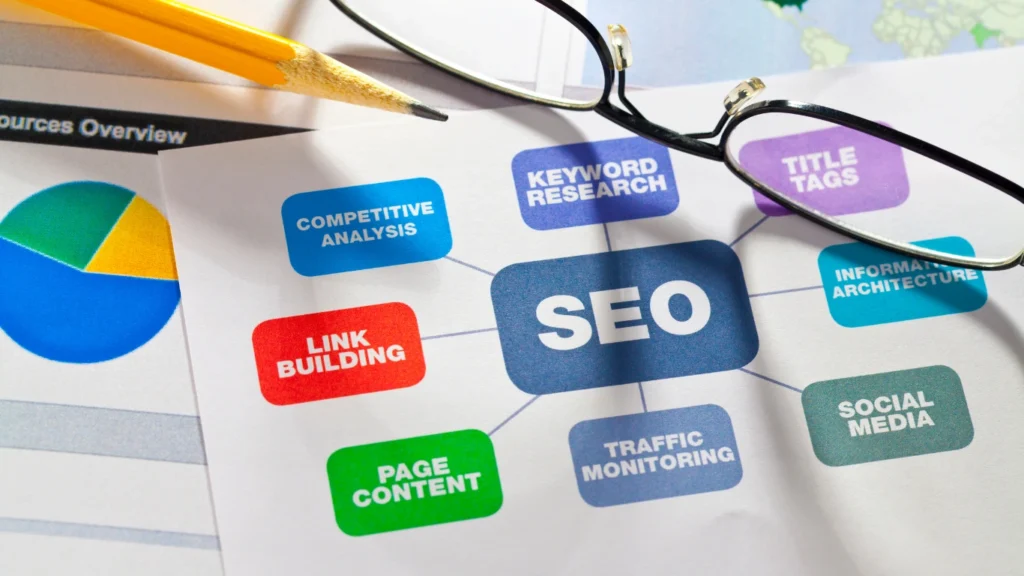
The Beginner’s Guide to Mastering On-Page SEO Techniques for Organic Growth in 2026 Are you trying to improve your website’s visibility on Google without investing heavily in ads?The answer lies in On-Page SEO. This guide will explain the key On-Page SEO Techniques you need to know in 2026, making it easy for beginners, small business owners, and students to understand and use. 1. What is On-Page SEO? On-page SEO is the process of optimizing individual web pages to appear higher in search engine results and attract more relevant visitors. It includes improving both the content and the HTML code of a page. These improvements are often called On-Page SEO Techniques, and they help search engines understand what your content is about and how useful it is for users. By applying the right techniques, you make your page easier to crawl, index, and rank. This includes optimizing title tags, headings, internal links, images, and keyword placement. At the same time, on-page optimization improves user experience by making pages more readable, faster to load, and easier to navigate. When your content is well-structured and valuable, Google is more likely to trust it and show it to the right audience, leading to better visibility, higher engagement, and consistent organic growth over time. On-page SEO, also known as “on-site SEO,” involves optimizing elements on your website to enhance its search engine ranking and user experience.It refers to optimizing what search engines can directly see and interact with on your page. The aim is to inform Google that your page provides the best and most valuable answer for a particular search query. Why on-page SEO is important before off-page SEO: Imagine your website as a house. On-page SEO is like ensuring the foundation is strong, the rooms are well-organized, and the address is clearly written. This is exactly what On-Page SEO Techniques help you achieve by improving structure, clarity, and relevance. Off-page SEO is like promoting the house to others. You wouldn’t invite people to a messy, unfinished house, would you? Likewise, you must first optimize your page with proper on-page SEO methods so Google understands what your page is about and sees it as a quality result before seeking external support. A clean, optimized page builds trust, improves user experience, and increases the chances of higher rankings and better engagement. How on-page SEO helps Google understand your content: Google uses special programs called “crawlers” or “spiders” to read and understand web pages. By using on-page SEO factors such as clear title tags, proper heading structure, and relevant keywords, you are essentially providing Google with a detailed summary and map of your content. These elements are part of essential On-Page SEO Techniques that help search engines understand the topic, relevance, and quality of your page. This helps Google correctly categorize your page and match it with relevant user searches. When your content follows proper structure and clarity, it becomes easier for crawlers to index it and for users to navigate it. As a result, your page has a better chance of ranking higher, attracting targeted traffic, and delivering value to the right audience. Consistently applying strong On-Page SEO Techniques builds long-term visibility and trust with search engines. Related Reading: Want to learn more about the bigger picture?Check out our full guide: [What Is SEO? A Beginner’s Guide] Difference between On-Page and Off-Page SEO Feature On-Page SEO Off-Page SEO Location Elements on your website (content, code, images) External signals away from your website (links, social media) Focus Relevance, quality, user experience (UX) Authority, trustworthiness Example Optimizing your title tag Earning a backlink from a news site Real-Life Example (Blog Post) Imagine you write a blog post titled “10 Must-Try Pulaoo Recipes.” Some On-Page SEO Techniques you would use include: Including your main keyword (for example, pulao recipes) in the title and the main heading so search engines clearly understand your topic. Optimizing the images with descriptive alt text to improve accessibility and image search visibility. Structuring the content with clear H2 and H3 headings so both users and crawlers can easily scan the page. Using related LSI keywords like “healthy low-carb meals” and “pulao diet for beginners” to increase topical relevance. These On-Page SEO Techniques help improve clarity, user experience, and keyword relevance, which increases the chances of your post ranking higher and reaching the right audience organically. 2. Why On-Page SEO Is Important in 2026 Mastering website on-page SEO through effective On-Page SEO Techniques is more critical now than ever before. Here’s why it remains the foundation of any successful SEO strategy for sustainable online growth and visibility. Helps Google Rank Your Pages: By implementing on-page SEO best practices, you directly influence how Google assesses the topic and quality of your content, leading to higher rankings. Improves User Experience (UX): Well-optimized pages are faster, easier to read, and simpler to navigate. Google highly prioritizes UX, making it a key seo on page factor. Increases Organic Traffic: When your pages rank higher for valuable keywords, you capture more of the free, organic traffic from search engines. Reduces Bounce Rate: Users are less likely to click away immediately (high “bounce rate”) if your page loads quickly and clearly delivers on the promise of the search result. Supports E-E-A-T Signals: Google’s emphasis on Experience, Expertise, Authoritativeness, and Trustworthiness (E-E-A-T) is partially judged by your on-page elements. High-quality, well-cited, and expertly written content is a strong E-E-A-T signal. 3. Core On-Page SEO Elements (Beginner Must-Know) The following On-Page SEO Techniques are the non-negotiable fundamentals every beginner must master to build strong visibility, relevance, trust, and long-term organic growth online. 1. Title Tag Optimization The Title Tag is the most important on-page SEO factor. It’s the clickable headline that appears on the Google Search Results Page (SERP). Ideal Length: Keep it between 50–60 characters to prevent it from being cut off by Google (truncated). Focus Keyword at the Beginning: Place your primary keyword (on page seo techniques) as close to the start as possible. Power Words Example: Words like
What Is SEO, Explained: The A-Z Roadmap to Google Ranking Success (2026 Edition)
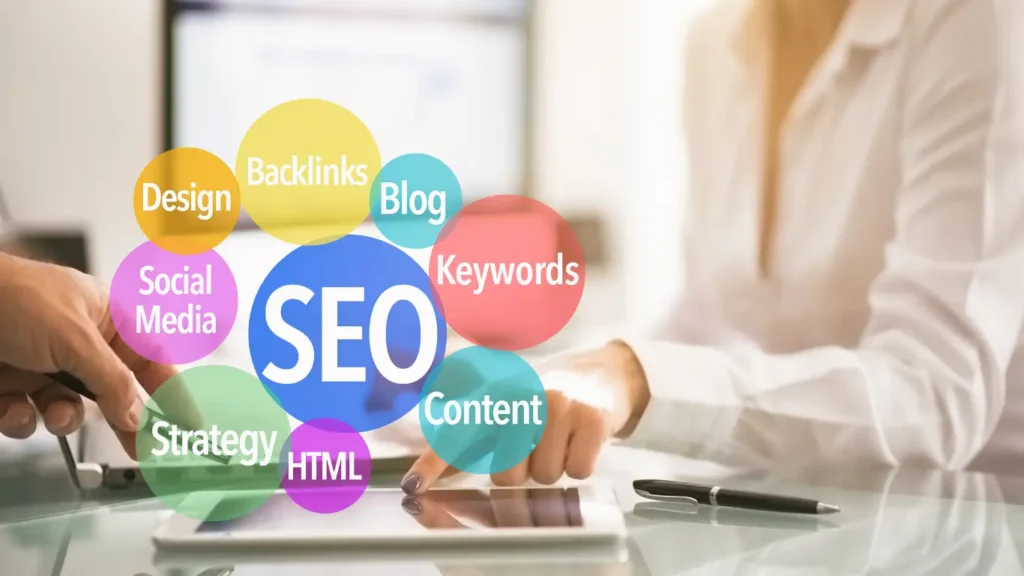
The Definitive 2026 Guide to What Is SEO: Achieve Exponential Organic Traffic Growth in 2026 If you are running an online business, website, blog, or Instagram page, then what is SEO (Search Engine Optimization) is one of the most powerful tools you can use for growth.Today, simply being online is no longer enough. You need to be seen. You need people to find you exactly when they need your product or information. This is where knowing what is seo becomes essential. The more helpful, relevant, and high-quality your content is for Google and other search engines, the better your search engine rankings become — leading to more organic traffic, more visibility, and more sales or customers.SEO (search engine optimization) is the engine that drives consistent, high-quality traffic to your website, blog, or digital property. 1. What Is SEO in Simple Terms? SEO stands for Search Engine Optimization. It is a set of strategies, techniques, and tactics used to increase the number of visitors to a website by achieving a high ranking in the search results page (SERP) of search engines like Google, Bing, and others. In short, it is a process where you optimize your website so that Google or any other search engine can rank it among the top results. When someone, especially a beginner, asks what is SEO, the simplest answer is: it’s the art and science of getting organic clicks. When people search for things like: ✔ “best digital marketing agency in Delhi” ✔ “how to start a blog” ✔ “buy running shoes” If your website appears in the top 3 results, you win! This is why understanding what is SEO and implementing it is so important. The main goal of any SEO professional is to improve the website’s ranking. 2. Why SEO Is Important In a world that is increasingly influenced by AI and highly advanced search, understanding why SEO is important has never been more critical. What is SEO, if not a fundamental business strategy for the digital age? 1. Free Organic Traffic (Growth Without Paying) Organic traffic is permanent and free. Unlike paid ads, where traffic stops when you stop paying, SEO continues to work 24/7. This consistency is the main reason why mastering what is SEO leads to long-term growth. It’s about building an asset, not renting traffic. The volume and quality of organic traffic are unmatched. 2. Builds Trust and Authority (E-E-A-T) People inherently trust the top results from Google. Being listed among the top positions means that Google, the world’s largest search engine, trusts your content. Ranking high strong brand image. This directly relates to Google’s E-E-A-T framework. A solid SEO process establishes you as an authority in your niche. 3. High ROI and Long-Term Benefits What is SEO at its core? It is a long-term investment. While results may take a few months (usually 3–6 months), the return on investment (ROI) is usually higher than most other digital marketing efforts over time. A well-ranked piece of content can bring traffic for years. r> 4. Easily Beats Your Competitors If your competitor is using SEO and you are not, you are likely to lose 80% of your online visibility. In competitive niches, the difference between being first and second in search results is huge. The first result usually gets around 28.5% of all clicks. Ignoring what is SEO means giving away your market share to your competitors 5. Users Always Search Before Buying (The Buyer Journey) 92% of users research using Google before making a purchase. They search for solutions, read reviews, and compare products. A well-optimized website ensures you are present at every stage of the buyer’s journey. This targeted presence is a key digital marketing advantage brought by SEO. 3. How Search Engines Work To understand what is SEO, you must first grasp how search engines like Google work. Search engines primarily follow three complex yet easy-to-understand steps: 1. Crawling What it is: Google bots (also known as spiders) constantly discover new and updated pages on the web by following links. They scan and read the code and content of your website’s pages. SEO Goal: Make sure your site structure is clean, internal linking is strong, and you do not have any pages blocked by robots.txt. 2. Indexing What it is: The search engine stores and organizes the information collected during crawling in a large database called the index. Thinkof the index as a massive digital library. A page must be indexed to be eligible to rank. SEO Goal: Use tools like Google Search Console to check index coverage and fix any issues that prevent pages from being added to the index. 3. Ranking What it is: When a user enters a search query, like “what is SEO,” Google’s algorithms retrieve the most relevant pages from its index and rank them based on relevance, quality, and authority. SEO Goal: This is the ultimate goal of all your efforts. It involves optimizing for the 200+ Google ranking factors. This entire process is what what is SEO is aiming to achieve. 4. Google Algorithm: How Google Ranks Your Content Google’s core ranking system is designed to reward the best content that satisfies user intent. While Google uses 200+ ranking factors, focusing on the most influential ones is key for a beginner learning what is SEO. These are the primary SEO ranking factors: 1. High-Quality, In-Depth Content Google loves helpful, original, and problem-solving content. Your content must go deeper than your competitors. It should fully answer the user’s query. This is the foundation of the modern SEO strategy. 2. Search Intent Match User kya search kar raha hai $rightarrow$ same intent ka content hona chahiye. If a user searches for “what is SEO,” they want a definition and a guide, not a pricing page for your services. Matching intent is paramount. 3. Relevant Keywords Proper keyword research & placement is essential. Using primary (like “what is SEO“), secondary, and LSI keywords ensures Google fully understands the context of your page. The