Difference Between SEO & SEM (Beginner-Friendly Guide)
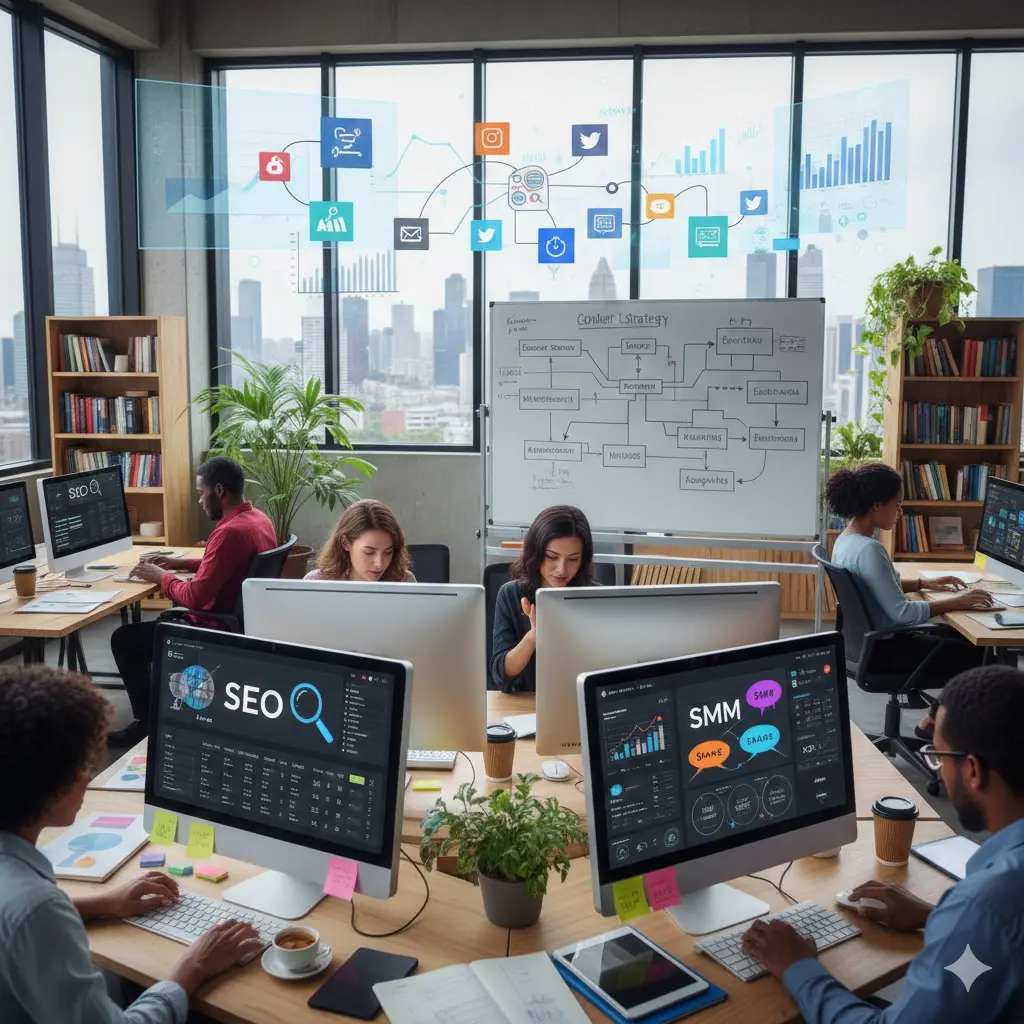
Understanding the Difference Between SEO and SEM in 2025 In today’s digital world, if your business isn’t appearing in search engine results, it’s not really visible to the global audience. Whether you’re an entrepreneur or a marketing professional, you’ve likely come across two important terms: SEO and SEM. Understanding the difference between these two is essential for any effective digital marketing strategy. While both aim to increase your visibility on Search Engine Results Pages (SERPs), they use different methods to achieve this. At Social Crafter, we believe that a brand’s success depends on how well it balances organic growth with paid visibility. This guide will provide a detailed explanation of the difference between SEO and SEM, helping you understand and apply both for your business. What is SEO? (Search Engine Optimization) Search Engine Optimization, or SEO, is the process of optimizing your website to rank higher in the organic search results of search engines like Google.The main goal of SEO is to bring in traffic at no cost. When someone asks what SEO is, they’re essentially asking how to make a website more appealing to Google’s algorithm. SEO: The Foundation of Digital TrustSEO is a long-term strategy. It’s about building authority and offering value. Because organic results are earned through performance, users often find them more trustworthy compared to advertisements. For more knowledge of SEO, you can also visit the Search Engine Journal article on SEO. Beyond trust, SEO is the ultimate investment in your brand’s digital equity. Unlike paid ads, where visibility vanishes the moment you stop paying, SEO creates a self-sustaining ecosystem of traffic. By consistently producing high-quality, expert-led content, you signal to Google that your website is a top-tier resource. This process involves meticulous website optimization, ensuring that every technical detail—from site speed to mobile responsiveness—is flawless. As you climb the rankings, your brand gains limitless credibility, becoming the “go-to” authority for users seeking genuine solutions. In 2026, SEO isn’t just about keywords; it’s about crafting a meaningful user experience that turns casual visitors into loyal advocates of your brand. The Three Pillars of Search Engine Optimization To truly understand the difference between SEO and SEM, it’s important to understand the three main components of a solid SEO strategy: On-Page SEO: This involves optimizing individual web pages.It includes creating high-quality content, conducting keyword research, and ensuring that your website is optimized properly. Off-Page SEO: This focuses on building your website’s credibility through backlinks and social signals.It’s about showing Google that other websites trust your content. Technical SEO: This refers to the backend of your website.It ensures fast loading speeds, mobile-friendliness, and correct indexing. Without technical SEO, even the best content may not rank well. What is SEM? (Search Engine Marketing) On the other side of the spectrum is Search Engine Marketing (SEM).In the past, the term SEM was used to describe both paid and organic strategies, but today it mainly refers to paid search advertising. When considering the difference between SEO and SEM, the main factor is speed.SEM allows you to skip the long waiting period required for organic rankings by paying for a top position in the search results. Through Google Ads and Pay-Per-Click (PPC) advertising, you can reach your audience immediately. This instantaneous reach is an explosive advantage for launching new products, promoting seasonal sales, or outperforming competitors during peak demand. While SEO builds your long-term legacy, SEM acts as a precision-guided catalyst, delivering high-intent traffic to your doorstep the very moment your campaign goes live. It provides the agility every modern brand needs to stay ahead in a fast-paced market.” How SEM Works SEM is based on a bidding system.You select keywords, set a budget, and create ads. When someone searches for those terms, Google runs an auction. If your bid is competitive and your ad is of high quality, your ad will appear. You only pay when someone clicks on your ad—this is known as cost per click (CPC). This dynamic auction ensures that Search Engine Marketing remains a fair and highly effective marketplace for businesses of all sizes. By mastering this bidding process, you can achieve targeted dominance for specific high-intent keywords, ensuring your brand captures the attention of potential customers exactly when they are ready to convert. At Social Crafter, we optimize these bids to maximize your ROI, turning every click into a powerful growth opportunity for your business.” Deep Dive: The Critical Difference Between SEO and SEM “To help you decide which approach fits your business, let’s look at the difference between SEO and SEM in several key areas. Understanding these pivotal factors will empower you to invest your marketing budget with absolute confidence and strategic precision.” 1. The Cost Factor “The most noticeable difference between SEO and SEM is the cost. SEO is often referred to as ‘free traffic,’ but in reality, it requires a significant investment in time, content, and professional expertise. However, you don’t pay for the clicks themselves. SEM, on the other hand, requires a direct budget. Each time someone clicks on your ad, money is taken from your account, making it a high-speed investment for immediate, measurable market impact.” 2. Time and Speed “If you need leads immediately, SEO may not be the best option. Search Engine Optimization takes months to show meaningful results. In contrast, the difference between SEO and SEM is clear in terms of speed. With SEM, you start receiving paid traffic as soon as your campaign goes live, providing an instant surge in visibility and high-intent conversions for your brand.” 3. Sustainability and Return on Investment “SEO is a long-term investment. Once you rank, you can maintain that position for a long time without ongoing costs. SEM, however, is a ‘pay-to-play’ model. The moment you stop paying, your traffic stops as well. This is an important difference between SEO and SEM when planning for long-term budgeting, as SEO builds lasting digital equity while SEM provides a high-intensity, immediate boost to your market presence.” SEO vs SEM — Key Comparison Table
What is SEM & How Google Ads Work
“Master What is Search Engine Marketing: The Proven Success Guide to Empower Your Brand” “In the hyper-competitive digital landscape of 2025, visibility is the currency of success. Every second, millions of users turn to search engines to find solutions, products, and services. For a business, the primary challenge isn’t just being online; it’s being found at the exact moment a potential customer is looking for what you offer. To achieve this, businesses must understand search engine marketing to secure a consistent flow of high-quality traffic to their digital storefronts.” “This guide will break down the complexities of what is search engine marketing and explain exactly how Google Ads—the world’s most powerful advertising platform—operates. At Social Crafter, we believe that understanding the mechanics of search engine marketing is the first step toward building a sustainable and profitable online presence.” In the hyper-competitive digital landscape of 2025, visibility is the currency of success. Every second, millions of users turn to search engines to find solutions, products, and services. For a business, the primary challenge isn’t just being online; it’s being found at the exact moment a potential customer is looking for what you offer. To achieve this, businesses need a consistent flow of high-quality traffic to their digital storefronts. What is Search Engine Marketing? To understand the digital ecosystem, one must first grasp the core concept of search engine marketing. In the simplest terms, SEM is a digital marketing strategy used toaincrease the visibility of a website in search engine results pages (SERPs) through paid advertising. While SEO is about “earning” traffic, SEM is about “buying” highly targeted traffic. When we discuss search engine marketing, we are referring to the entire umbrella of paid search activities. For example, imagine you are searching for a “website designer near me.” The first few results you see at the top of the page, often marked with a small “Ad” label, are the result of an SEM campaign. These businesses are using paid search marketing to bypass the long wait times associated with organic ranking and appear directly in front of motivated buyers. Simple Definition of search engine marketing What is search engine marketing? It is a data-driven strategy where advertisers bid on specific keywords that users of services like Google and Bing might enter when looking for certain products or services. This gives the advertiser the opportunity for their ads to appear alongside results for those search queries. How SEM Works in Simple Terms The lifecycle of an SEM ad is remarkably fast, occurring in milliseconds. Here is the step-by-step breakdown: User Search: A user enters a specific query into Google, signaling a clear intent to find a specific product, information, or professional service immediately. The Auction: Google identifies all ads whose keywords match the search query. This sophisticated automated system filters advertisers in real-time to ensure that only the most helpful and relevant ads are selected. Ad Display: Based on a combination of bid amount and ad quality, Google shows the most relevant ads. These premium top-tier placements capture maximum visibility and drive significantly higher click-through and conversion rates. The Click: When the user finds the ad helpful and clicks on it, the advertiser is charged. This performance-based model ensures your budget is spent only on verified engagement, effectively maximizing your overall ROI. SEM vs SEO – What’s the Difference? Understanding what is search engine marketing requires a clear distinction between paid and organic strategies. Both are essential components of a holistic digital strategy, but they serve different purposes. Factor SEM (Search Engine Marketing) SEO (Search Engine Optimization) Cost Paid search ads require a budget for every click. Technically “free,” though it requires time/resource investment. Speed Near-instant results once the campaign is live. Takes months to see significant ranking improvements. Sustainability Traffic stops the moment the budget runs out. Provides long-term, compounding organic traffic. Control High control over exactly who sees your ad and when. Less control; rankings depend on Google’s algorithm. Placement Guaranteed top-of-page placement (if bid is high enough). Placements appear below paid ads. When to Use Which? “If you are launching a new product or need immediate sales, search engine marketing provides the speed you need. However, if you are building a brand for the next five years, SEO is your foundation. At Social Crafter, we often recommend a hybrid approach: using SEM for immediate lead generation while building SEO authority in the background. This dual-action strategy ensures that while you capture high-intent buyers today through targeted ads, your organic footprint continues to grow, ultimately lowering your long-term customer acquisition costs and solidifying your brand’s market dominance.” What is Google Ads? If SEM is the strategy, Google Ads is the engine. Google Ads (formerly Google AdWords) is Google’s proprietary online advertising platform. It is the primary tool businesses use when they want to implement search engine marketing effectively. Through Google Ads, businesses create online advertising on google that reaches users across a massive network. While most people associate SEM with the text ads on search result pages, Google Ads actually allows your brand to appear on YouTube, millions of third-party websites, and even within mobile apps. When professionals discuss search engine marketing, Google Ads is almost always the central focus because it commands the largest share of the global search market. Types of Google Ads Campaigns To master search engine marketing, you must understand the different “flavors” of ads available. 1. Search Ads These are the most common form of paid search marketing. They are text-based ads that appear on Google Search results. They are highly effective because they target ‘pull’ intent—the user is actively searching for a solution, effectively converting high-intent searchers into profitable customers for your business.” 2. Display Ads “Unlike search ads, display ads are visual (banners). They appear on the Google Display Network, which includes over 2 million websites and apps. This is less about immediate search intent and more about brand awareness and sem advertising, capturing user attention visually to build lasting brand recall and