Understanding the Difference Between SEO and SEM in 2025
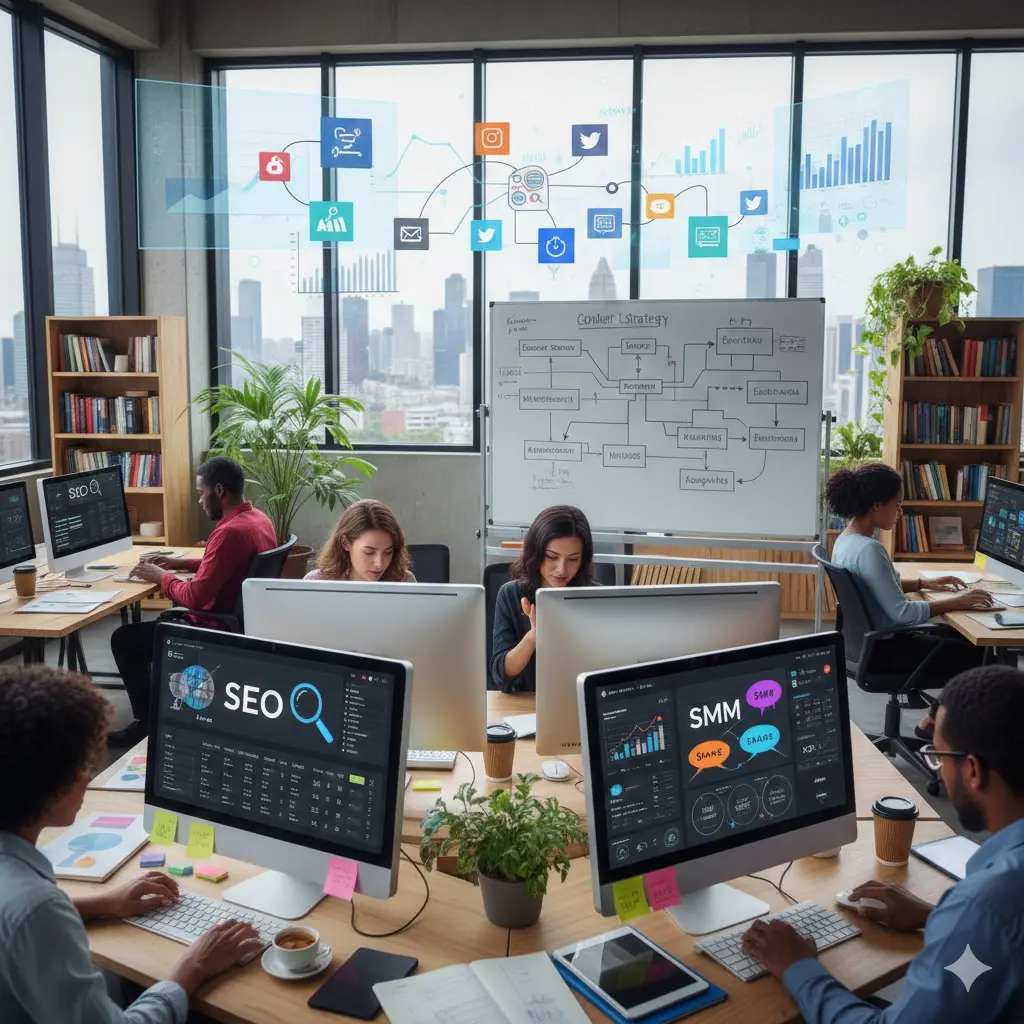
In today’s digital world, if your business isn’t appearing in search engine results, it’s not really visible to the global audience.
Table of Contents
ToggleWhether you’re an entrepreneur or a marketing professional, you’ve likely come across two important terms: SEO and SEM. Understanding the difference between these two is essential for any effective digital marketing strategy. While both aim to increase your visibility on Search Engine Results Pages (SERPs), they use different methods to achieve this.
What is SEO? (Search Engine Optimization)
Search Engine Optimization, or SEO, is the process of optimizing your website to rank higher in the organic search results of search engines like Google.
The main goal of SEO is to bring in traffic at no cost. When someone asks what SEO is, they’re essentially asking how to make a website more appealing to Google’s algorithm.
SEO: The Foundation of Digital Trust
SEO is a long-term strategy. It’s about building authority and offering value. Because organic results are earned through performance, users often find them more trustworthy compared to advertisements. For more knowledge of SEO, you can also visit the Search Engine Journal article on SEO.
Beyond trust, SEO is the ultimate investment in your brand’s digital equity. Unlike paid ads, where visibility vanishes the moment you stop paying, SEO creates a self-sustaining ecosystem of traffic. By consistently producing high-quality, expert-led content, you signal to Google that your website is a top-tier resource.
This process involves meticulous website optimization, ensuring that every technical detail—from site speed to mobile responsiveness—is flawless. As you climb the rankings, your brand gains limitless credibility, becoming the “go-to” authority for users seeking genuine solutions. In 2026, SEO isn’t just about keywords; it’s about crafting a meaningful user experience that turns casual visitors into loyal advocates of your brand.
The Three Pillars of Search Engine Optimization
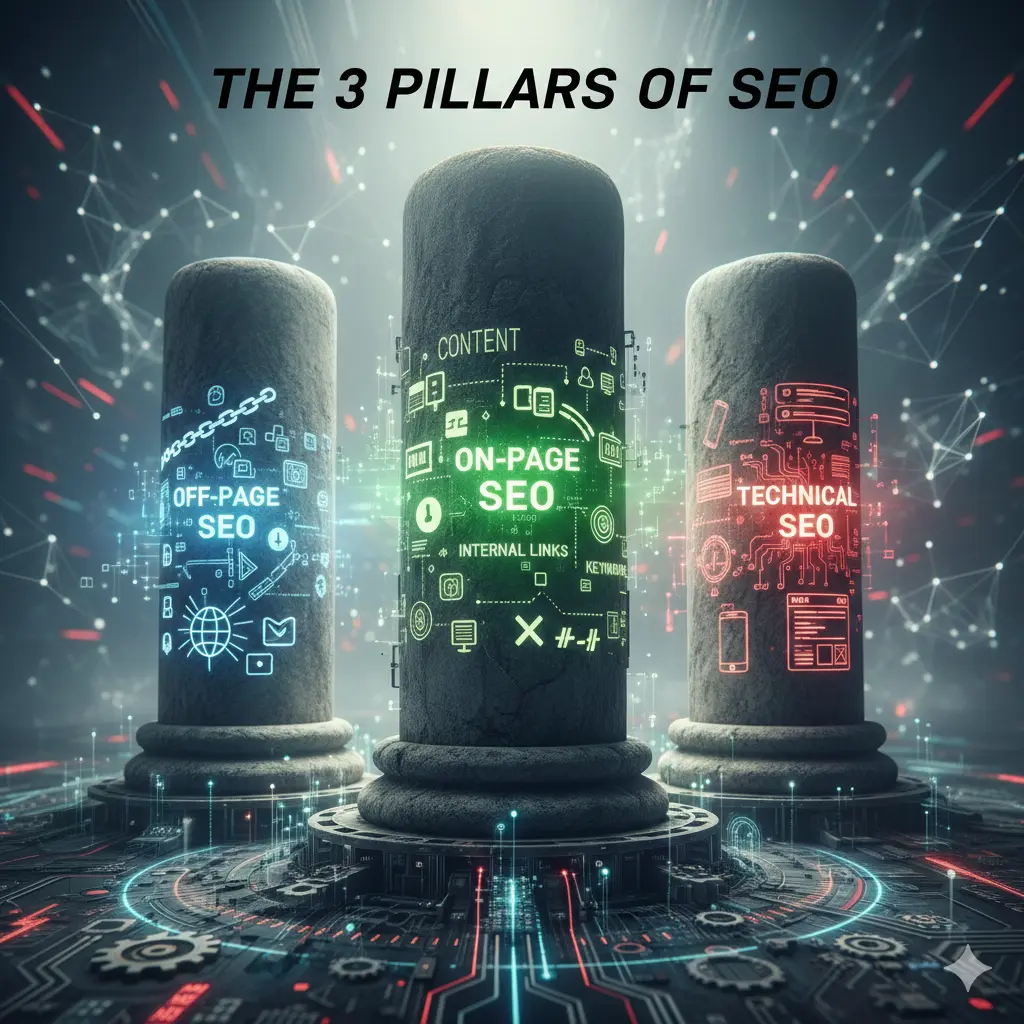
To truly understand the difference between SEO and SEM, it’s important to understand the three main components of a solid SEO strategy:
On-Page SEO: This involves optimizing individual web pages.
It includes creating high-quality content, conducting keyword research, and ensuring that your website is optimized properly.
Off-Page SEO: This focuses on building your website’s credibility through backlinks and social signals.
It’s about showing Google that other websites trust your content.
Technical SEO: This refers to the backend of your website.
It ensures fast loading speeds, mobile-friendliness, and correct indexing. Without technical SEO, even the best content may not rank well.
What is SEM? (Search Engine Marketing)
On the other side of the spectrum is Search Engine Marketing (SEM).
In the past, the term SEM was used to describe both paid and organic strategies, but today it mainly refers to paid search advertising.
When considering the difference between SEO and SEM, the main factor is speed.
SEM allows you to skip the long waiting period required for organic rankings by paying for a top position in the search results. Through Google Ads and Pay-Per-Click (PPC) advertising, you can reach your audience immediately.
This instantaneous reach is an explosive advantage for launching new products, promoting seasonal sales, or outperforming competitors during peak demand. While SEO builds your long-term legacy, SEM acts as a precision-guided catalyst, delivering high-intent traffic to your doorstep the very moment your campaign goes live. It provides the agility every modern brand needs to stay ahead in a fast-paced market.”
How SEM Works
SEM is based on a bidding system.
You select keywords, set a budget, and create ads. When someone searches for those terms, Google runs an auction. If your bid is competitive and your ad is of high quality, your ad will appear. You only pay when someone clicks on your ad—this is known as cost per click (CPC).
This dynamic auction ensures that Search Engine Marketing remains a fair and highly effective marketplace for businesses of all sizes. By mastering this bidding process, you can achieve targeted dominance for specific high-intent keywords, ensuring your brand captures the attention of potential customers exactly when they are ready to convert. At Social Crafter, we optimize these bids to maximize your ROI, turning every click into a powerful growth opportunity for your business.”
Deep Dive: The Critical Difference Between SEO and SEM
“To help you decide which approach fits your business, let’s look at the difference between SEO and SEM in several key areas. Understanding these pivotal factors will empower you to invest your marketing budget with absolute confidence and strategic precision.”
1. The Cost Factor
“The most noticeable difference between SEO and SEM is the cost. SEO is often referred to as ‘free traffic,’ but in reality, it requires a significant investment in time, content, and professional expertise. However, you don’t pay for the clicks themselves. SEM, on the other hand, requires a direct budget. Each time someone clicks on your ad, money is taken from your account, making it a high-speed investment for immediate, measurable market impact.”
2. Time and Speed
“If you need leads immediately, SEO may not be the best option. Search Engine Optimization takes months to show meaningful results. In contrast, the difference between SEO and SEM is clear in terms of speed. With SEM, you start receiving paid traffic as soon as your campaign goes live, providing an instant surge in visibility and high-intent conversions for your brand.”
3. Sustainability and Return on Investment
“SEO is a long-term investment. Once you rank, you can maintain that position for a long time without ongoing costs. SEM, however, is a ‘pay-to-play’ model. The moment you stop paying, your traffic stops as well. This is an important difference between SEO and SEM when planning for long-term budgeting, as SEO builds lasting digital equity while SEM provides a high-intensity, immediate boost to your market presence.”

SEO vs SEM — Key Comparison Table
| Feature | SEO (Organic) | SEM (Paid) |
| Primary Goal | Long-term authority & organic search traffic | Instant visibility & paid traffic |
| Time to Results | 6 to 12 months | Immediate |
| Cost Structure | Investment in content/tech | Cost per click (CPC) |
| Control | Search engines decide your rank | You control your position through bids |
| Trust Level | High (Earned) | Moderate (Sponsored) |
| Keyword Strategy | Informational & broad keywords | High-intent & commercial keywords |
SEO vs SEM — Detailed Advantages & Disadvantages
“When navigating the complex world of digital marketing, understanding the difference between SEO and SEM requires a deep dive into the strengths and weaknesses of each methodology. It is not merely about choosing one; it is about knowing how each tool fits into your overall business machinery. By mastering this balance, you transform your website into a powerhouse of growth, leveraging the permanent authority of organic search alongside the instant scalability of paid advertising. This strategic synergy is the ultimate competitive advantage for any ambitious brand looking to dominate the search results in 2026.”
Deep Dive: The Strategic Advantages of SEO
“The primary difference between SEO and SEM lies in the long-term equity you build, creating a permanent asset of trust and authority for your brand.”
1. Builds Industry Authority: Ranking high organically is a badge of honor. It tells the user that Google, the world’s most sophisticated algorithm, trusts your content. This builds a level of “Expertise” and “Authoritativeness” that paid ads simply cannot buy.
2. Compounding Cost-Efficiency: While the initial investment in search engine optimization might seem high, the cost per lead over 2-3 years is significantly lower than that of SEM. Once your content ranks, you don’t pay for the organic search traffic it generates.
3. Sustainable Reach: Statistics show that roughly 70-80% of search engine users ignore paid ads and focus solely on organic results. Therefore, mastering the difference between SEO and SEM allows you to tap into the largest pool of searchers.
The Inherent Challenges (Disadvantages) of SEO
1. Slow Growth Pattern: If you are looking for an overnight spike in sales, the difference between SEO and SEM becomes very clear. SEO is a marathon; it takes time to build the momentum necessary to outrank established competitors.
2. The Volatility of Algorithms: Even with the best website optimization, a major Google core update can shift your rankings. SEO requires constant vigilance and adaptation.
Deep Dive: The Strategic Advantages of SEM
“The difference between SEO and SEM is most apparent when speed is the priority, delivering an explosive and immediate surge in high-intent traffic to your business.”
1. Granular Precision Targeting: With paid search advertising, you have total control. You can target users based on their specific location, the time of day, and even their browsing behavior. This makes PPC advertising incredibly efficient for high-intent traffic.
2. The Ultimate Testing Tool: SEM provides immediate data. If you are unsure which headline works better for your organic skin care brand, Vanya, you can run an SEM test. Within 48 hours, you will know which message resonates, allowing you to use those insights for your long-term SEO strategy.
3. Top-of-Page Dominance: In many high-competition niches, the top four results are ads. SEM ensures you are seen before the user even starts scrolling through organic listings.
The Inherent Challenges (Disadvantages) of SEM
1. Financial Sensitivity: The difference between SEO and SEM is that SEM is “pay-to-play.” In competitive sectors, the cost per click (CPC) can escalate quickly, potentially eating into your profit margins if not managed by experts like Social Crafter.
2. Ad Fatigue and Distrust: Modern users are savvy. Many have developed “ad blindness,” where they subconsciously ignore anything marked as “Sponsored.”
The E-E-A-T Approach in Search Marketing (2025 Edition)
“In the current year 2026, Google’s search landscape is governed by E-E-A-T (Experience, Expertise, Authoritativeness, and Trustworthiness). This framework is vital to understanding the difference between SEO and SEM in the modern age, ensuring that every click you generate—whether organic or paid—is backed by an unshakable foundation of brand credibility and user trust.”
1.For SEO: Your content cannot just be a collection of keywords. It must provide unique value. At Social Crafter, we ensure that your content reflects real-world experience. If you are selling natural products, your content should feel like it was written by a skincare expert, not an AI bot. This improves your Google ranking significantly.
2. For SEM: Trustworthiness is equally important. Your Google Ads quality score is determined by how well your landing page matches the user’s search intent. A transparent, secure, and fast-loading website is essential for lowering your cost per click (CPC).
By applying the E-E-A-T approach, we bridge the difference between SEO and SEM, ensuring that both strategies work toward a common goal of brand credibility.
SEO vs SEM for Small Business: A Strategic Roadmap
For a small business, the difference between SEO and SEM is often a matter of survival versus growth. Choosing where to put your first dollar is a high-stakes decision.
1.When to Prioritize SEO: If you have a sustainable business model but a limited monthly advertising budget, focus on SEO. It allows you to build a foundation that will generate “free” leads in the future. It is about building an asset you own.
2. When to Prioritize SEM: If you are launching a new product, running a seasonal promotion, or need to prove your concept to investors, SEM is the way to go. It bypasses the “waiting period” of organic search.
3. The “Social Crafter” 70/30 Rule: We often advise our clients that the difference between SEO and SEM should be managed through a balanced portfolio. Spend 70% of your effort on the long-term stability of SEO and 30% on the high-speed growth of SEM. This ensures that while you are waiting for your organic rankings to climb, your business is still generating revenue.
Real-Life Example
To illustrate the difference between SEO and SEM in action, let’s look at the strategy we implemented for Vanya, our organic skincare line.
1.The SEO Foundation: We identified that users were searching for “benefits of chemical-free face wash.” We created an in-depth, expert-led guide on this topic. Over six months, this page began to rank #1. Now, Vanya receives thousands of monthly visitors interested in natural products without paying for ads.
2. The SEM Turbocharge: During the holiday season, the competition for “best gift for women” was intense. We didn’t have time to wait for a blog post to rank. We launched a highly targeted Google Ads campaign.
3. The Result: Because the user had already seen Vanya’s organic articles (SEO), they trusted the brand when they saw the ad (SEM). This synergy proves that understanding the difference between SEO and SEM is the key to doubling your conversion rates.
Common Myths That Cloud the Difference Between SEO and SEM
1.”SEO is a one-time setup”: This is a dangerous myth. The difference between SEO and SEM is that SEO is like a garden; it requires constant weeding and watering (content updates and technical fixes).
2. “SEM is only for big companies with massive budgets”: False. Because of the precision of paid search advertising, small businesses can compete by targeting “long-tail” keywords that big corporations ignore.
3.”If I do SEM, I don’t need SEO”: This is the biggest mistake. Relying solely on SEM is like renting a house—you have no equity. Once you stop paying, you are homeless (invisible).3.
Conclusion: Mastering the Synergy with Social Crafter
Ultimately, the difference between SEO and SEM is not about which strategy is superior, but about how they complement each other. A truly professional digital marketing strategy uses SEO to build the “home” and SEM to send out the “invitations.”
By understanding the technical difference between SEO and SEM, Social Crafter helps brands like Vanya achieve sustainable growth. We focus on website optimization to ensure your organic foundation is solid, while using PPC advertising to capture immediate market share. In 2025, the winner isn’t the brand with the biggest budget; it’s the brand that understands the nuanced difference between SEO and SEM.
Frequently Asked Questions (FAQs)
The most significant difference between SEO and SEM is the payment model. SEO focuses on earning organic placement through quality, while SEM focuses on buying placement through bidding.
Yes, but growth will be slower. Many established brands rely heavily on SEO. However, without SEM, you may lose out on high-intent customers who click the first thing they see.
For local businesses, the difference between SEO and SEM allows you to appear in the “Local Map Pack” organically while also running “Local Services Ads” to appear at the very top for urgent searches.
Directly, no. Google keeps the two separate. However, the brand awareness generated by SEM can lead to more people searching for your brand name, which is a positive signal for SEO.
At Social Crafter, we recommend starting with a focus on SEO for long-term health, while using a small, controlled SEM budget to test keywords and generate immediate sales.
our team is ready to provide tailored answers.
Struggling to grow your brand online? Discover simple, proven strategies that turn your content, design, and marketing into real results.